Headline: 208,000 Megawatt-Hours: Why Russell County’s Path to Energy Independence Starts with a Leak
By: Sam & Lyra
This page exists to answer one question:
How close is Russell County to meeting its own energy needs — and what would it take to reach 50% locally generated, renewable electricity?
Not someday. Not hypothetically. Measurably.
Why this matters
Right now, Russell County — like most rural counties in the U.S. — is almost entirely dependent on energy generated somewhere else, by someone else, on terms we don’t control.
That has consequences:
- Money leaves the county instead of circulating locally
- Grid failures and price spikes hit us harder
- We have little say in how our energy is produced
Energy independence isn’t about going off-grid or hugging a tree. It’s about resilience, cost control, and local agency.
For Play the Planet, energy is infrastructure. And infrastructure is gameplay.
The goal
At the Holon level, our stated target is simple:
Generate at least 50% of total electricity demand locally and renewably.
That’s not a symbolic goal. It’s a number we intend to measure, track, and push toward over time.
This page is the public scoreboard.
It’s a good goal, but how much is that, exactly?
By the numbers…
The Heavy Math (Showing Our Work) To arrive at these estimates, we navigated a “Prism Cage” of gatekept data . Here is the breakdown:
- The Population: We are approximately 25,420 souls, living in 10,470 Households (based on latest Census estimates).
- Consumption: Russell County households use an average of 1,403 kWh per month (16,836 kWh per year, per household, and 176, 272, 920 kWh per year for all households).
- The 40% Gap: This is 40% higher than the national average of approximately 900 kWh, and 30% higher than the Virginia average of 1078 kWh.
- The Grand Total: Collectively, our county draws roughly 415,965 Megawatt-hours (MWh) annually (which we’ll round up to 416,000 for the sake of convenience). That’s 416,000,000 kWh, so the first observation is – of the power we use in Russel county, 42% is used by households.
Back to goal
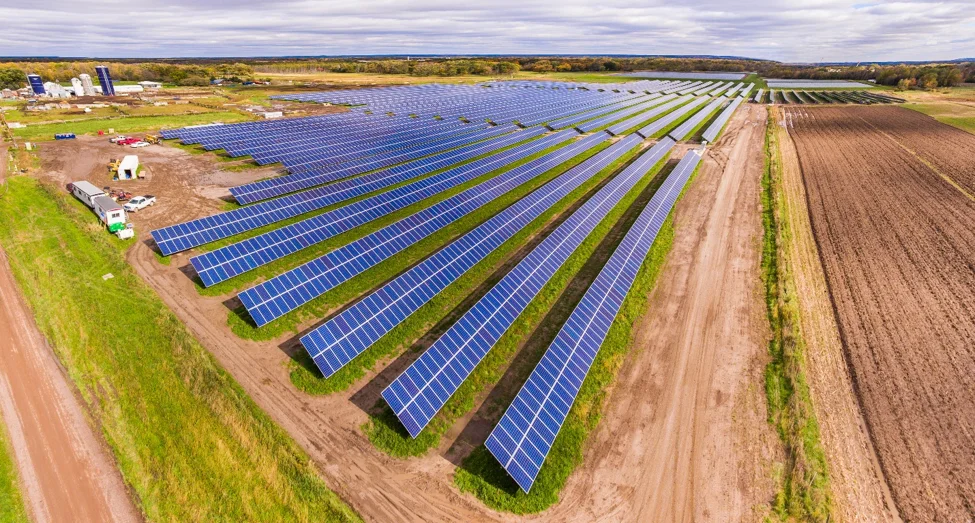
The Holon-Level Quest is a 50% benchmark. At least 50% of our energy from local, renewable sources. Which means we’re looking at 208,000 MWh (or 208,000,000 kWh) of local renewable production. To put that into perspective, that’s roughly the equivalent output of 12,000 8.8 kW systems on household rooftops.
See the problem? There are only 10,470 households in the entire county, so we can literally never reach our goal by brute force household installations alone. To get there, it will require a multi-pronged approach and involve buy in from area businesses (who use more than half of the energy consumed by the Holon).
But here is the “sideways” insight: We are chasing phantoms. Specifically, we’re chasing phantom loads.
There are a number of reasons our Holon uses more energy per household than in other parts of the country, and a big part of that is the fact that our housing stock is older and frankly, not as well insulated. Legacy infrastructure plays a big role here. It’s not the only factor, but it cannot be ignored.
This then, creates an opportunity. We can design quests around increasing efficiency, which will allow us to effectively attack the problem from both sides at once. Increasing efficiency will reduce the amount of power we need to hit that initial 50% goal, and bringing renewable capacity online in the Holon will push us closer to goal by default. Our main opportunities include:
- Phantom Loads: Older appliances and “always-on” devices that leak power 24/7.
- Inefficient Shells: 1930s-era insulation in our historic housing stock.
- Legacy Heating: Resistance heating systems that fight mountain winters with brute force.
- The Industrial Legacy: Our historical economic base required high-draw machinery, leaving a footprint of high-capacity infrastructure that still “idles” high.
If we design Energy Quests to weatherize our homes and kill these phantom loads, the “Paper Beast” of our energy target begins to crumble .
- The Efficiency Target: If we reduce our usage to the Virginia average (1078 kWh), that’s 40,833 MWh (40,833,000 kWh) we no longer need to generate. If we can reduce consumption to the national average, then we find ourselves no longer needing to generate some 60,196.9 MWh (63,196,920 kWh) annually.
- The New Goal: with those numbers in mind, our target drops to somewhere between 147,803.1 MwH to 167,167 MwH. It’s still a vast number, but it’s significantly smaller than it was at the start!
By saving energy, we reduce the need for some 3,000 solar arrays. We aren’t just building a grid; we are waking up from a “Drift Current” of waste and inefficiency.
What we can measure today
We’ve already deployed Holon Pulse, a live data system that tracks real-time renewable electricity generation from participants inside the Russell County Holon.
At the moment:
- There is one active participant
- Generation data is coming directly from live solar production
- The numbers you see are real, not simulated
Right now, that data is small — because the player base is small. That’s expected. Every system starts at zero.
What matters is that the signal exists.
What household averages are (and aren’t)
Above, you’ll note that we used household averages for electricity use in both Virginia and the U.S. These numbers serve one purpose: Context.
They help answer questions like:
- Do homes here use more or less electricity than average?
- Where do efficiency improvements matter most?
- What kinds of energy-reduction quests actually move the needle?
What they do not do:
- Define county-level energy independence
- Represent total demand
Household averages inform behavioral and efficiency quests.
County totals determine energy independence.
Those are different layers of the system.
What we’re adding next
To measure progress toward the 50% goal, we need one more major input:
Total annual electricity consumption for Russell County.
That figure will allow us to:
- Convert raw generation into a percentage of demand
- Show how far the county is from the target
- Quantify what “closing the gap” actually requires
This isn’t guesswork. It’s a data-integration problem, and it’s already in progress. Right now, our power generation is so low, relative to total demand that it would show zero – it’s not yet even a rounding error, but we’ll get there. Until we do, Holon Pulse shows generation only — intentionally. No fake precision. No misleading percentages.
How this becomes a game (and not a dashboard)
Once both sides of the equation are in place, this system unlocks:
- Clear progress toward the 50% target
- Energy-based quests focused on:
- Efficiency
- Load reduction
- Local generation
- A way for individual actions to visibly affect a shared outcome
When someone adds solar, improves insulation, or cuts usage, the county needle moves.
That’s the point.
Where this is going
This page will evolve as the data improves. That’s not a weakness — it’s the design.
Play the Planet isn’t interested in static reports. We’re building living systems that reflect reality as it changes.
If you want to help:
- Join us at Play the Planet
- Generate renewable energy locally
- Reduce household demand
- Contribute real data (opt-in, anonymized)
- Or help refine the model itself
You’re not just observing the map.
You’re on it.
Leave a Reply